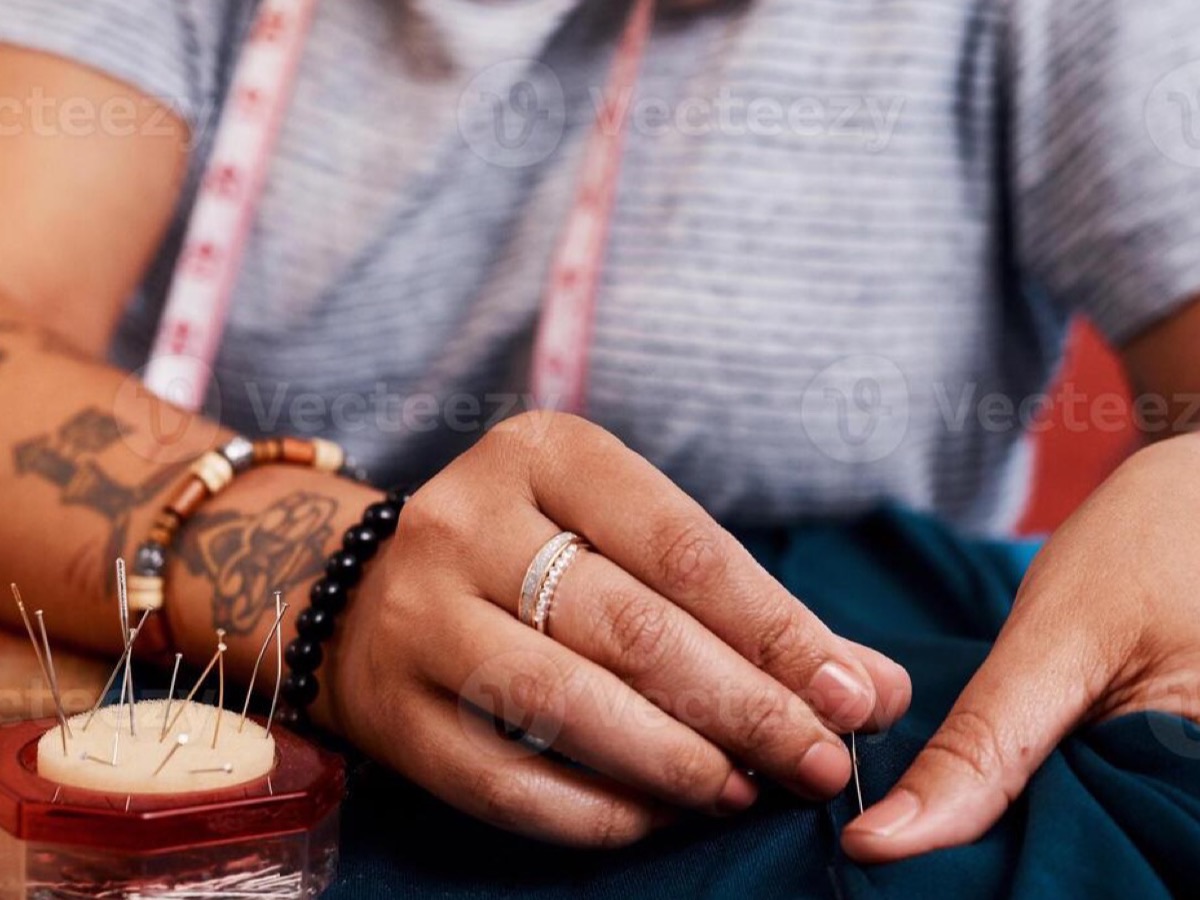
A gap along a lining seam can be closed with small slip stitches, but first you need to know whether the thread failed or the lining is being pulled out of shape.
Just before winter, I put on a wool coat and noticed my hand disappearing into a space that was not a pocket. The lining had opened along part of the lower side seam. The outer cloth was still sound, so the repair looked like a simple run of stitches. Once inside, however, I could see that the seam had not merely frayed: one edge had a row of undamaged holes where old thread had been, and the lining nearby was pulling towards the back.
That distinction matters. If the seam allowance is sound, restitching is straightforward. If the lining is too tight or has torn beside the seam, a stronger seam alone will transfer the strain to the next weak point. My repair needed a little easing before it needed closing.
Inspect from inside without unpicking everything
Turn the coat gently inside out through the lining opening or a convenient hem access point. You do not need to dismantle the entire garment. Compare the loose section with its counterpart on the other side. Look for remaining seam allowance, fraying fabric and old stitch lines.
Run a hand over the lining while the coat hangs naturally. It should have enough ease to cover the wool without pulling at the armhole, shoulder or hem. If the gap reopens as soon as the coat is on a hanger, repair position and fit before adding stitches.
Small frayed areas can sometimes be supported with a narrow strip of lightweight fusible interfacing or a backing patch suited to the lining. Test heat tolerance carefully and never press a hot iron into a layer you have not identified. A broad tear may need an actual patch rather than ambitious threadwork.
Match the seam, not just the colour
Use a fine hand-sewing needle and strong thread compatible with the lining weight. Colour should be close enough that it does not shout through a thin outer fabric, though most of the stitching should sit within the existing fold.
Align the old needle holes or seam creases where they remain. Pin a short section at a time, keeping the seam allowance flat. Avoid catching the wool coat beneath; check between layers with your fingers after pinning. This is easy to do inadvertently on a curve and surprisingly tedious to undo through a narrow opening.
Where the lining has simply slipped from a folded edge, tuck the raw allowance back to its original depth. If the allowance disintegrates in your fingers, sew into sound material further in or add support rather than stitching through dust.
Let slip stitches disappear between layers
For two folded edges, a slip stitch or ladder stitch makes a tidy closure. Secure the thread inside the fold, take a small stitch through the opposite fold directly across the gap, then move a few millimetres along and enter the other side. Each visible stitch travels through the fold, with the connecting thread hidden when the edges draw together.
Work in short stages and snug the thread gently. Pulling too hard creates a shiny gathered seam that will be under strain immediately. I close five centimetres, release the lining and check the shape before continuing.
If reconstructing an ordinary machine-style seam by hand, small backstitches through the aligned allowance may provide more strength. They still need enough ease. Dense, tiny stitches through fragile cloth can perforate it like a paper tear line.
Check the coat from the outside
Secure the final thread with small knots tucked between layers and trim the tail. Turn the coat right side out slowly, without using the repaired area as a handle for pulling the whole garment. Close any separate access opening using the same principle.
Put the coat on, reach into the pockets and move your arms normally. The lining should not tug at the new seam or hang below the outer fabric. Check that you have not stitched pocket bags into the seam inadvertently; it is a classic surprise when a previously capacious pocket vanishes.
My coat needed one short line of easing stitches above the damaged area as well as the slip-stitched gap. A month later, the repair remains flat and the other side is still intact. The real fix was not making the thread stronger than the cloth; it was giving the lining enough room to be a lining again.