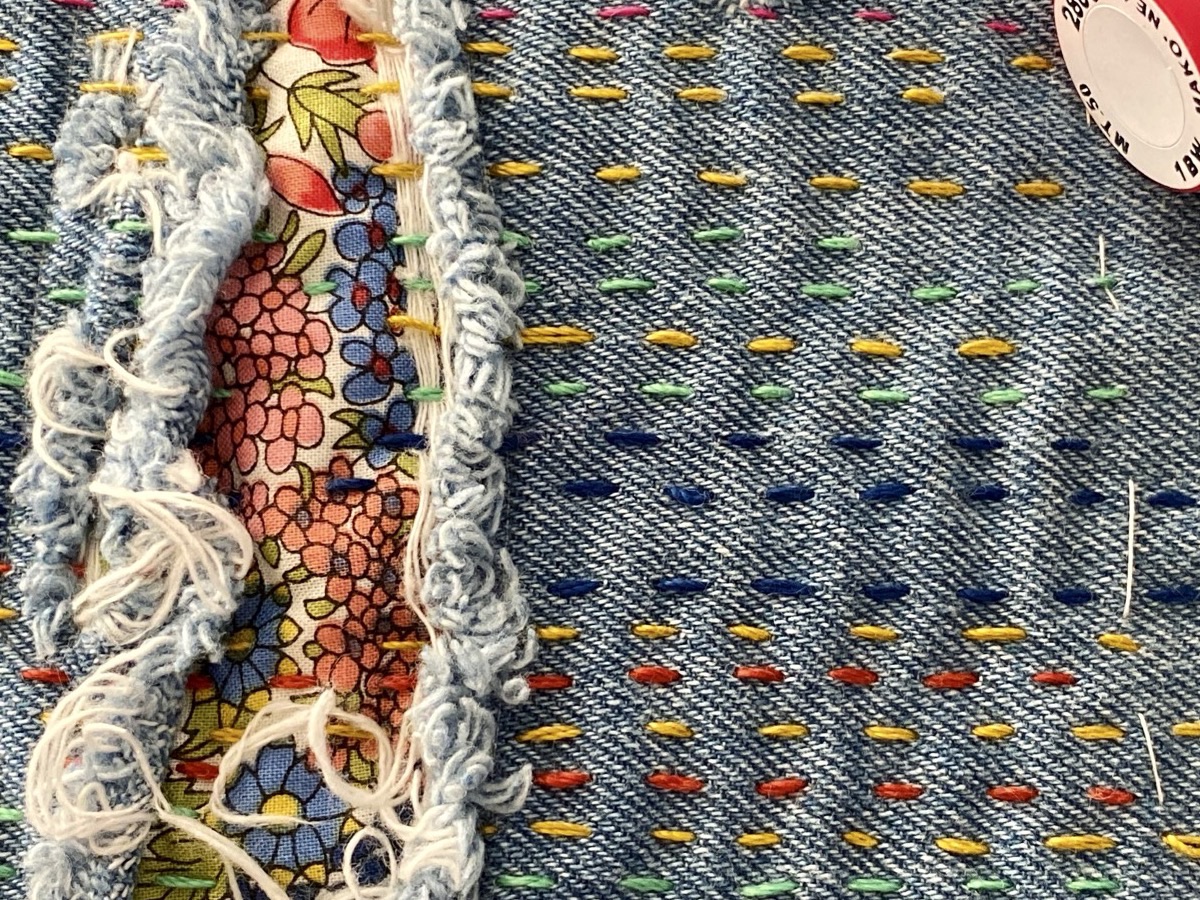
A woven darn can strengthen a thin elbow before a hole opens, using a light grid of yarn that follows the garment without stretching it out of shape.
My grey jumper did not have a dramatic hole. It had an elbow where the knitted loops had become so fine that light showed through, and I kept putting off the repair because there was nothing neat to sew together. That delay was a mistake. A knit is easier to support while its original loops still form a map. Once the yarn breaks, the edges run and every missing stitch makes the patch less obvious to place.
I darned it on a Sunday with a smooth wooden mushroom, matching wool and a blunt tapestry needle. The result does not pretend to be invisible. It is a neat, slightly darker oval that prevents the thin patch from turning into a weekend-ending hole.
Work on a relaxed garment
Wash and dry the jumper according to its care label if it is due, then lay it flat. Dirt and body oils can make fibres behave differently, and washing after a repair may change the surrounding fabric even if your darning yarn stays the same. Check that both are compatible before adding a contrasting wool that shrinks at a different rate.
Find the full area of thinning, not only the palest point. I hold the sleeve gently towards a window and place a few removable marker pins beyond the fragile zone. The darn needs to reach sound loops on every side. A circle works well for an elbow, but let the actual wear define its shape rather than drawing a badge around the hole.
Place the mushroom or another smooth rounded support beneath the area, easing excess fabric away from seams. It should hold the knit open enough to see, never stretch it wider than its resting shape.
Lay the first threads in sound loops
Use yarn close in weight to the original knit. Very thick yarn makes a rigid patch and can burden the weak edges; very fine yarn may need too many passes. A blunt needle travels between fibres without splitting them as readily as a sharp one.
Begin beyond the marked weak area. Make tiny anchoring stitches in a sound part and lay parallel threads across the thin zone, following the direction of the knitted columns. Carry each line beyond the opposite edge. Leave a small loop at the turns so the yarn is not pulling the sleeve narrower.
These foundation threads should sit on the surface with minimal disturbance to the loops beneath. A long float across an entire large hole may need support from intermediate stitches, but for a small thin elbow the grid supplies structure before heavy wear begins.
Weave across with room to breathe
Turn the work or change direction and weave the needle over and under the first set of threads. Alternate which thread begins each row so the structure interlaces. Every few rows, shift the over-under pattern to catch nearby knitted loops more securely, especially around the edges.
Do not pack the rows so tightly that the original knit disappears beneath a dense mat. Ease each row into place with the needle eye rather than pulling its point against the cloth. Around an elbow, a little extra yarn allows the fabric to bend. My first darn was drum tight and made the sleeve feel as though it had a cardboard lining.
When the weak area and its margins are covered, secure the end with small stitches in sound knitting. Run the final tail through the back of the work and trim it without cutting the original loops.
Let the darn join ordinary wear
Check the sleeve from the right side after removing the support. Smooth the jumper into its resting dimensions and compare the repaired elbow with the other one. A small honest border is better than an overworked blotch. If the patch is stretched flat while the surrounding knit is gathered, gently release the turns with the needle rather than steaming everything aggressively.
Wear the garment normally and inspect the repair after the first few outings. If it begins to pull, stop wearing it until you can add a little ease or reinforce an edge. Do not wait for the same sweet spot to thin again.
The grey jumper's darker oval is visible only when someone is looking for it, which suits me. More importantly, the elbow bends, the original loops are still there and the rest of the knit has not been dragged out of shape. Early darning is often modest work; that is its advantage.